How much does a live stream cost, and what drives the price
Cameras, length, location and internet. Plus one item you won't find in our quote, because we don't charge for it separately - a backup of absolutely everything.
“How much will it cost?” is the first question in almost every enquiry. And honestly, “it depends” may be true, but it helps nobody. So here’s the breakdown: what it depends on, and why two events with the same number of guests can differ in price by a factor of two.
Our live streams start from 600 EUR. For that we broadcast a shorter event with one camera, somewhere with usable internet that we can drive to. A simpler sports event with 3 to 4 cameras and a two-hour broadcast starts from 1,400 EUR.
There’s a wide band in between, and a handful of things decide where you land.
1. How many cameras
The biggest item in the whole quote. Every extra angle means another signal into the vision mixer and a longer rig.
- One camera. A press conference, a lecture, a meeting. The speaker and their slides, nothing more needed.
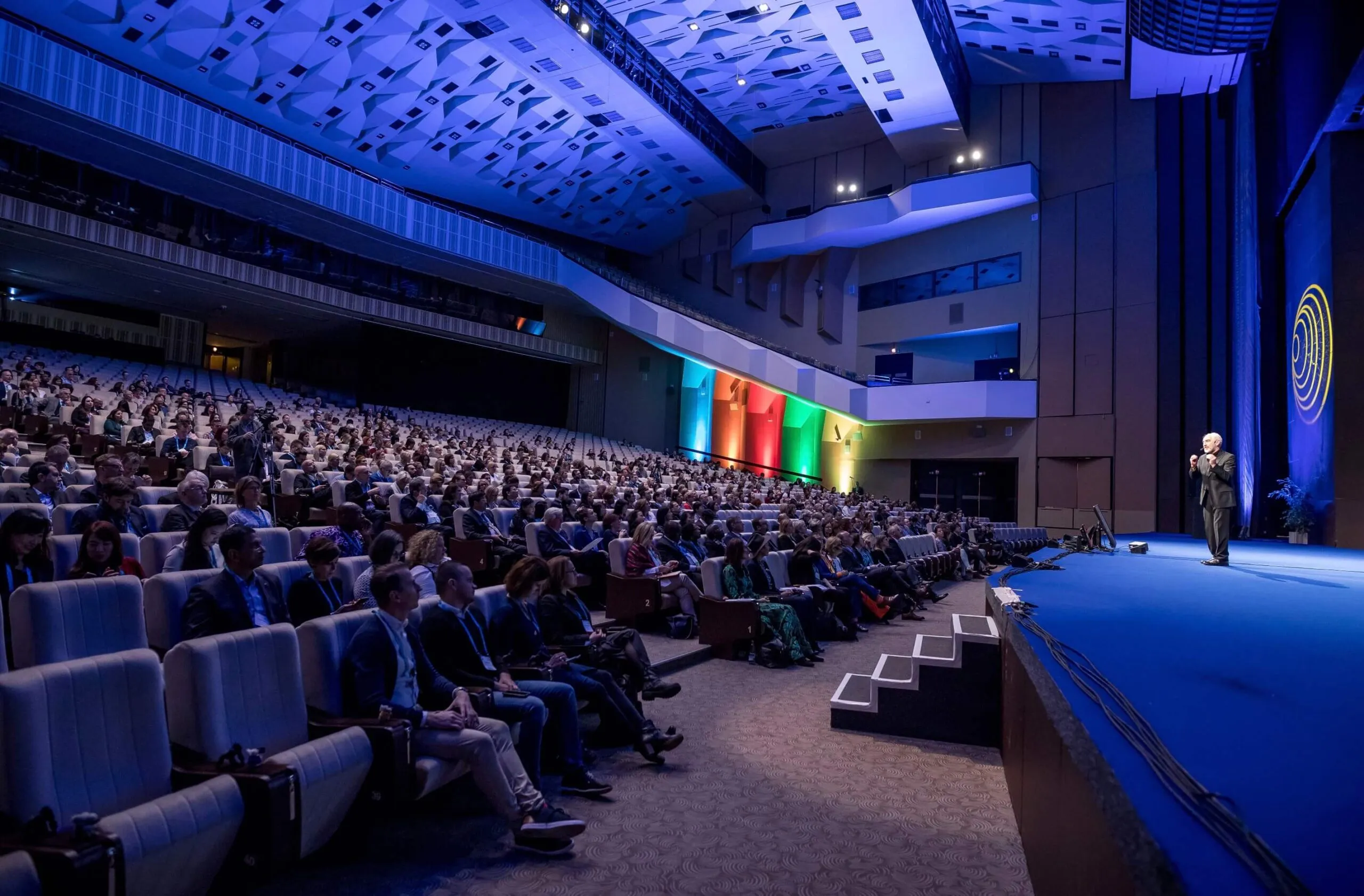
- Two or three. Standard for a conference. A wide shot, a close-up of the speaker, a shot of the audience. Nobody wants to stare at one angle for half a day.
- Four or more. Gala nights, concerts, sport. Wherever several things happen at once and the switching is half the experience.
More cameras don’t automatically mean more people, though. We also use robotic PTZ cameras that can follow the speaker on their own - with AI tracking, one operator can easily run two. At a conference, where the speaker walks around the stage and not much else happens, that saves money and nobody can tell from the result. In sport, where things are decided in a split second, we want a person behind the camera.
Not sure how many you need? No problem. Describe the event and we’ll work it out for you.
2. How long it runs
Here’s a catch that surprises almost everyone: you don’t only pay for airtime. Every event comes with travel, rigging, calibration, a test run - and packing up after the end. At an all-day conference we’re routinely on site two to three hours before the first camera goes live.
That’s why a five-hour event costs more than a two-hour one, but not two and a half times more. We build almost the same thing either way.
3. Where we’re going
Prague, Brno, Ostrava or straight abroad - moving the kit and the crew’s time on the road always show up in the price.
The venue itself matters too. Whether you can park by the entrance, or everything gets carried across half the building. How far it is to the stage. Where the control position can go. We can usually tell from photos, and for bigger events we come for a site visit.
4. Internet
The most underestimated item of all. Guest Wi-Fi isn’t enough for a broadcast - the moment two hundred people connect to it with their phones, the stream is the first thing to go down.
So we always ask about the specific connection. And when it isn’t usable - or nobody is quite sure - we solve it with satellite or carrier mobile data. It’s an extra item. Still cheaper than an event that goes wrong.
5. What else you want with it
This is where prices spread out the most, because there are plenty of options:
- Sound. How many microphones are needed, and whether the room has a sound engineer we can take a feed from or we handle the whole PA ourselves. A panel of six people at a table is different work from one speaker with a lapel mic.
- Lighting. Lighting the stage and the set. A camera needs more light than the human eye - a room that looks great in person can come across dull and flat on screen.
- Replay. A second look at a contested moment or a nice bit of play. It needs its own person.
- Live graphics. Scores, names, times - live, as they change.
- Drone shots. A view from above you won’t get from a tripod.
- Custom graphics. Stings, transitions, music, effects. A look of your own for the whole event.
- Remote speakers. Bringing Zoom, Teams or Google Meet into the broadcast isn’t “putting the call on the screen” - it’s another signal that has to line up in both picture and sound.
None of this has a fixed price, and we keep it that way on purpose. A name and a score in the corner of the screen is one job, a full graphics package with stings is another. It gets priced for the specific event.
Why we bring two of everything
And now the thing you won’t find as a separate line in our quote, because we don’t charge for it separately.
We bring a backup of absolutely everything. Cameras and lenses. A second control set-up and a second vision mixer. Two independent internet lines we can switch between mid-broadcast. Sound, power, parallel recording.
This isn’t caution dreamed up at a desk. Over the years so many things have let us down that we simply don’t set off without a backup. Kit breaks at the worst possible moment - that isn’t pessimism, that’s experience. The only difference is whether you have a spare to hand, or you’re standing on site explaining to the client that we aren’t broadcasting today.
We’ll be honest: having two of everything costs us a lot. Buying it, transporting it, maintaining it. It’s one of the reasons we aren’t the cheapest on the market.
But a live broadcast has one awkward trait - it happens once. There’s no tomorrow, no second take. And when someone hires us, they want certainty, not a discount.
When you compare quotes, ask the others about this too. The answer will tell you quite a lot about the supplier.
And the recording?
We agree it in advance. Some people want to take a drive home straight from the venue, others are happy with an edit a week later - and that makes a difference both to the price and to what we bring along. Tell us up front what you need and we’ll put it in the quote.
Whatever we agree, parallel recording always runs. Even if the whole network goes down halfway through, the event is recorded.
Why we don’t give a range
“Somewhere between 600 and 3,200 EUR” isn’t an answer you can plan a budget around. We would rather ask four things - what you’re running, where, when and how long it lasts - and send a specific figure within two working days. You know what’s included before you sign anything.
Because the most expensive live stream is the one that has to be done again. And the second most expensive is the one where you find out halfway through that the original price couldn’t cover what you were expecting.
Behind the scenes
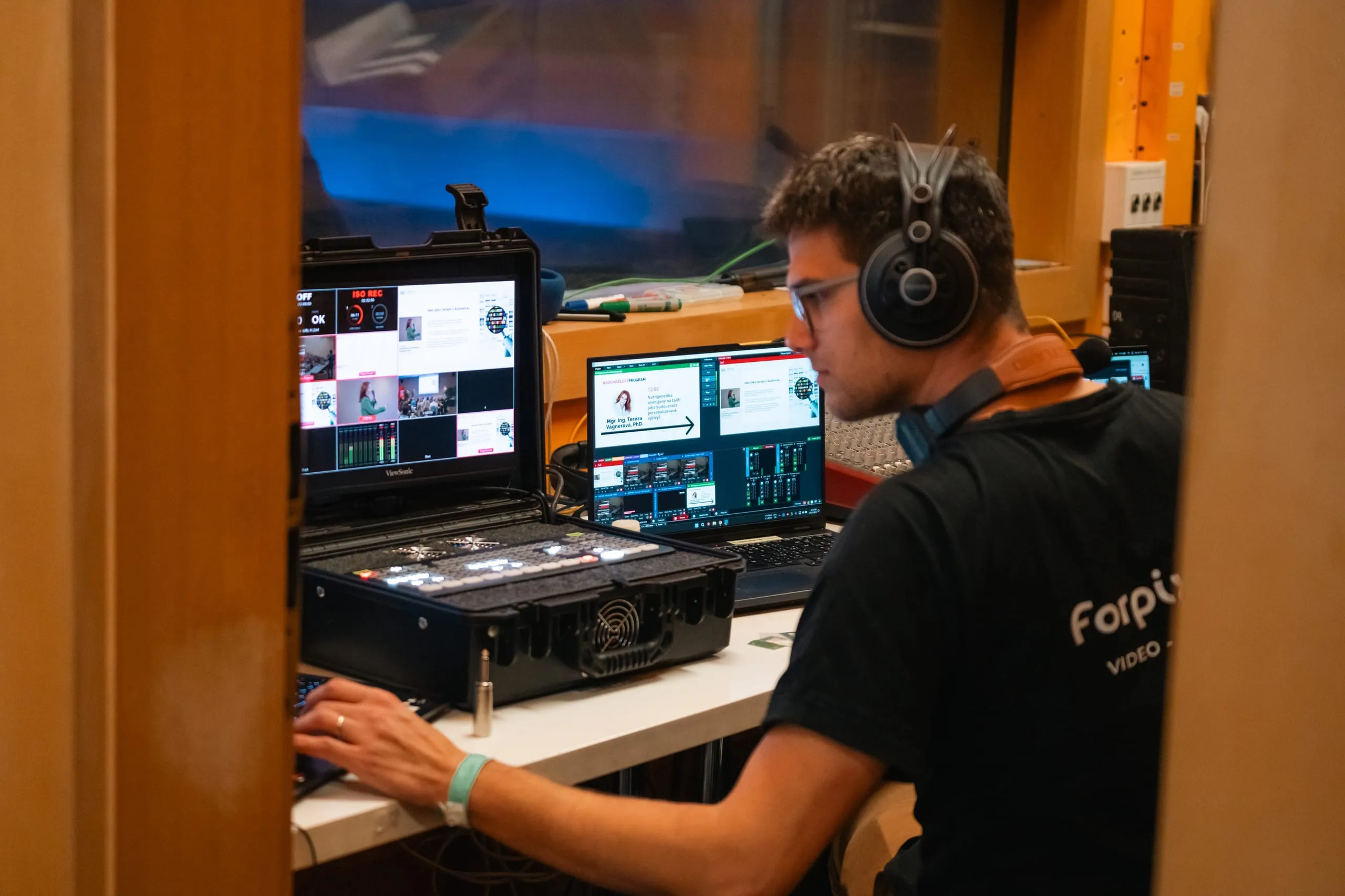
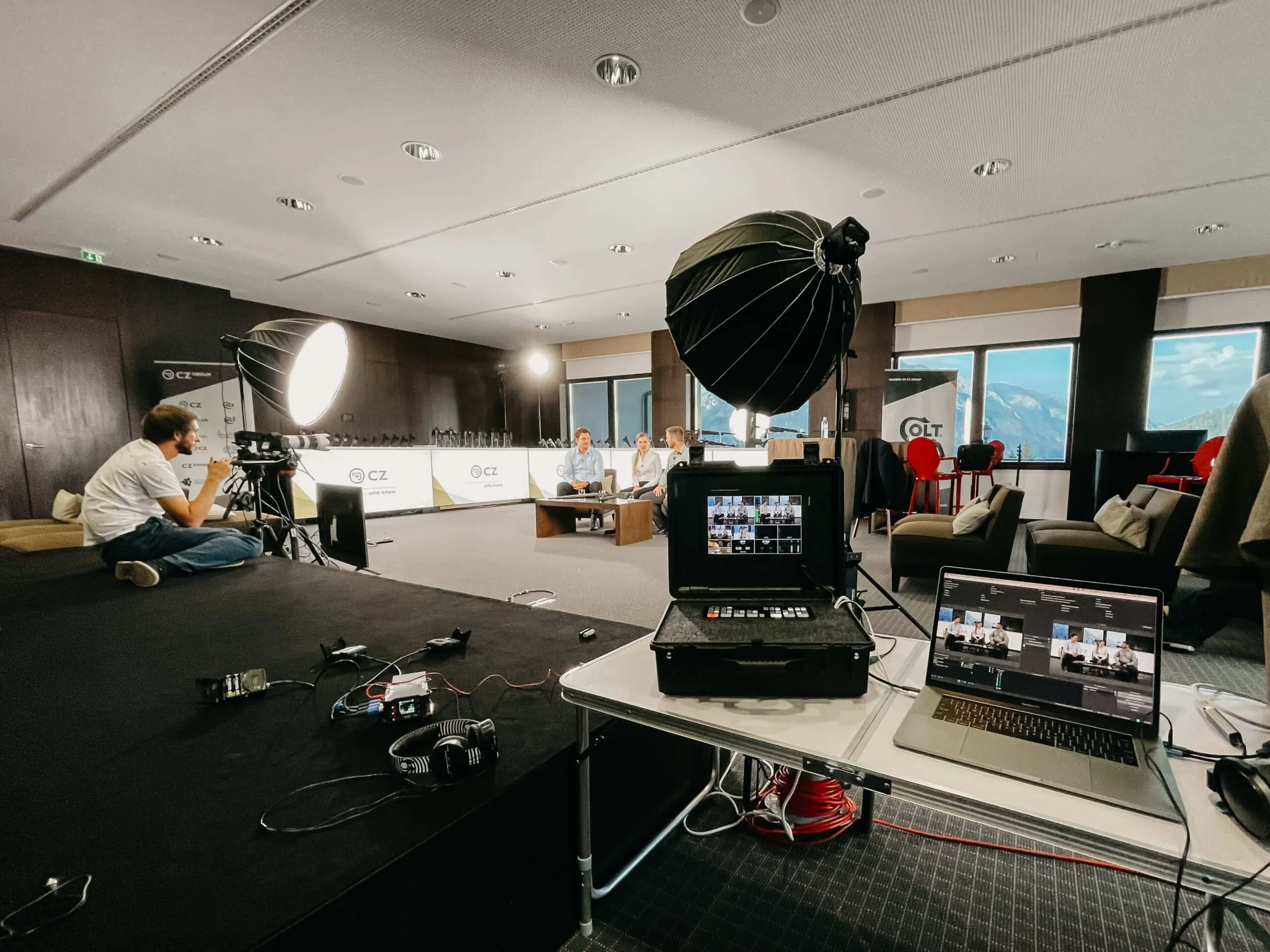
Conference control - multiview, mixing and recording in one place 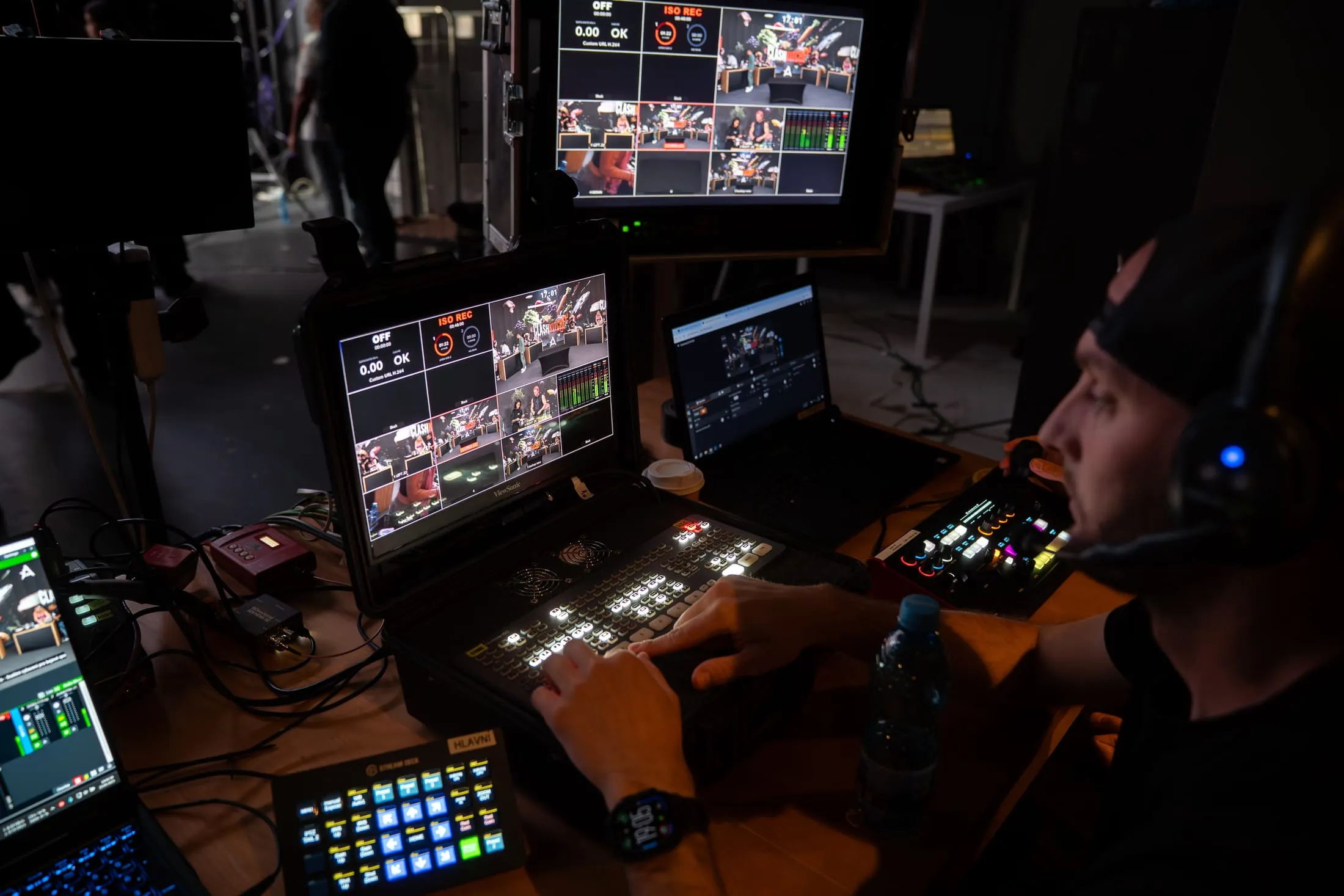
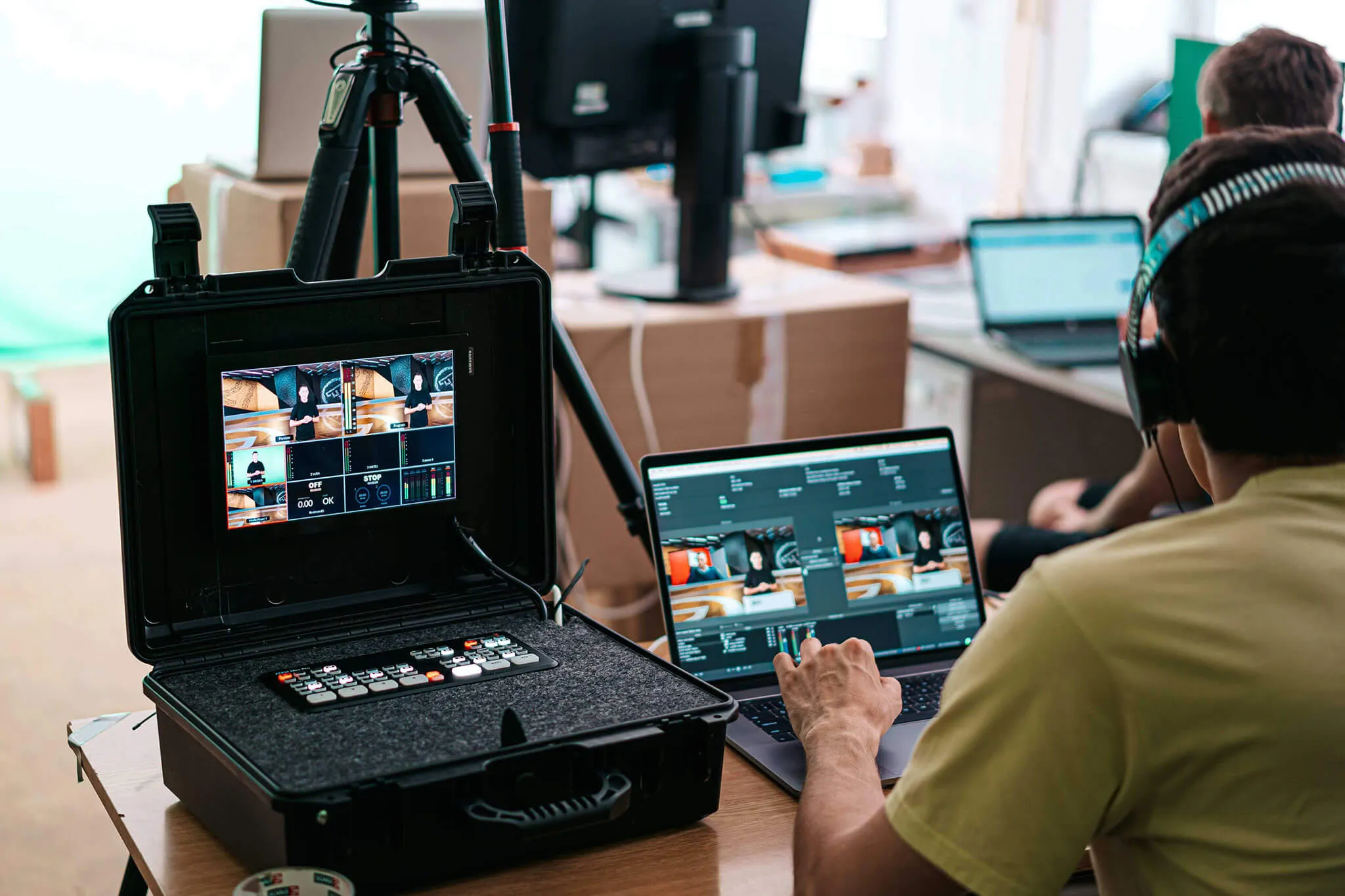
Vision mixing at a gala night 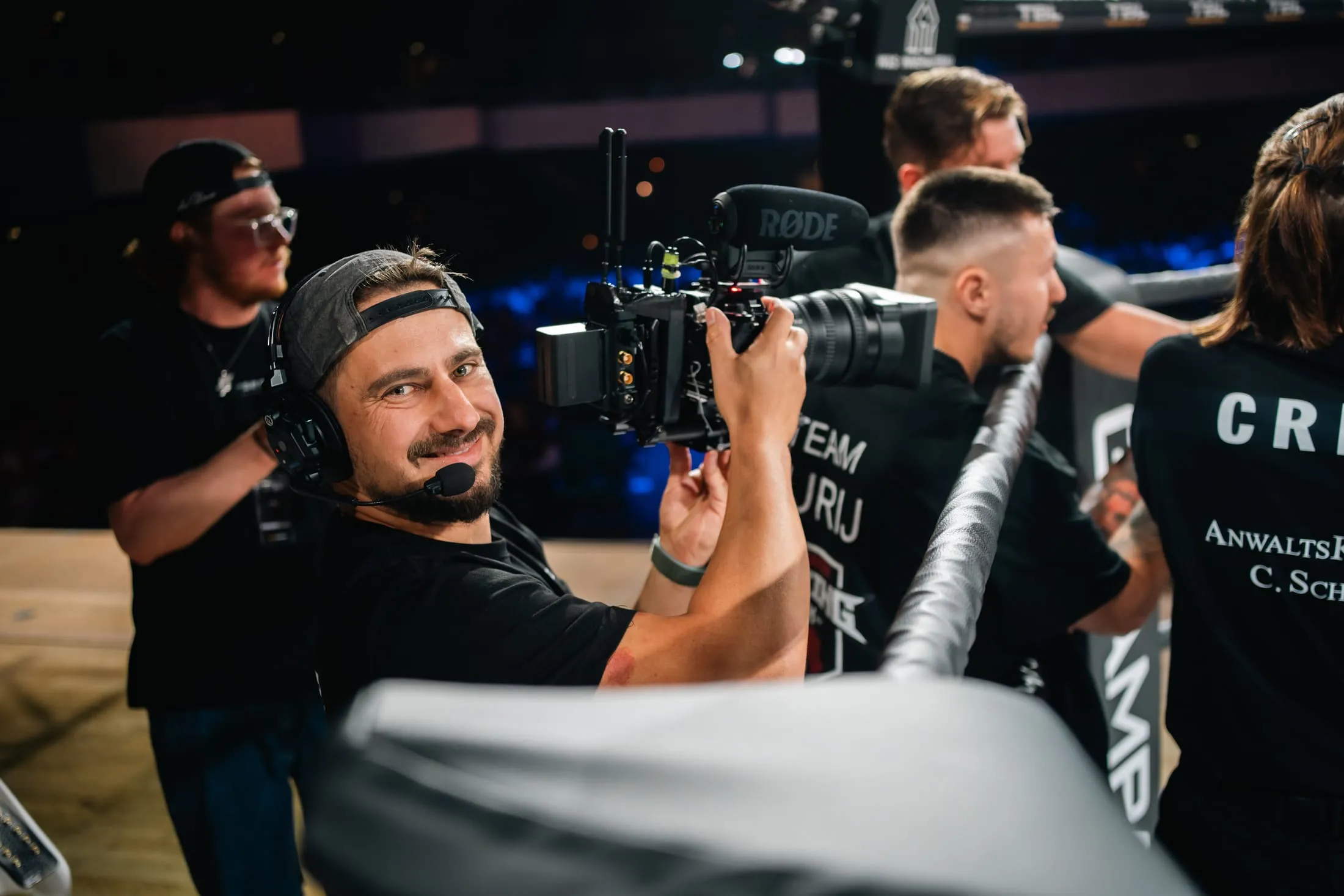
Ringside, TBL Germany 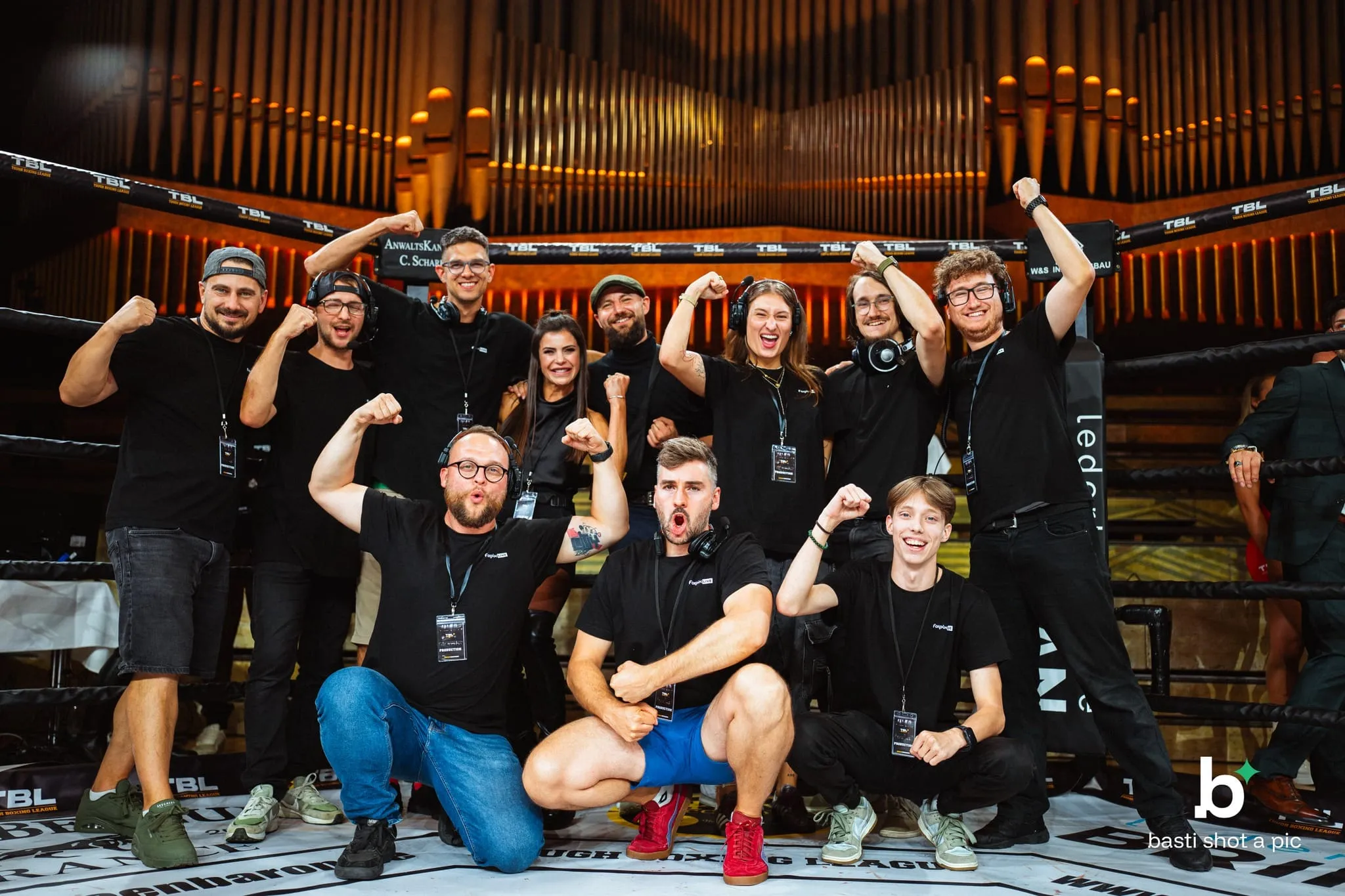
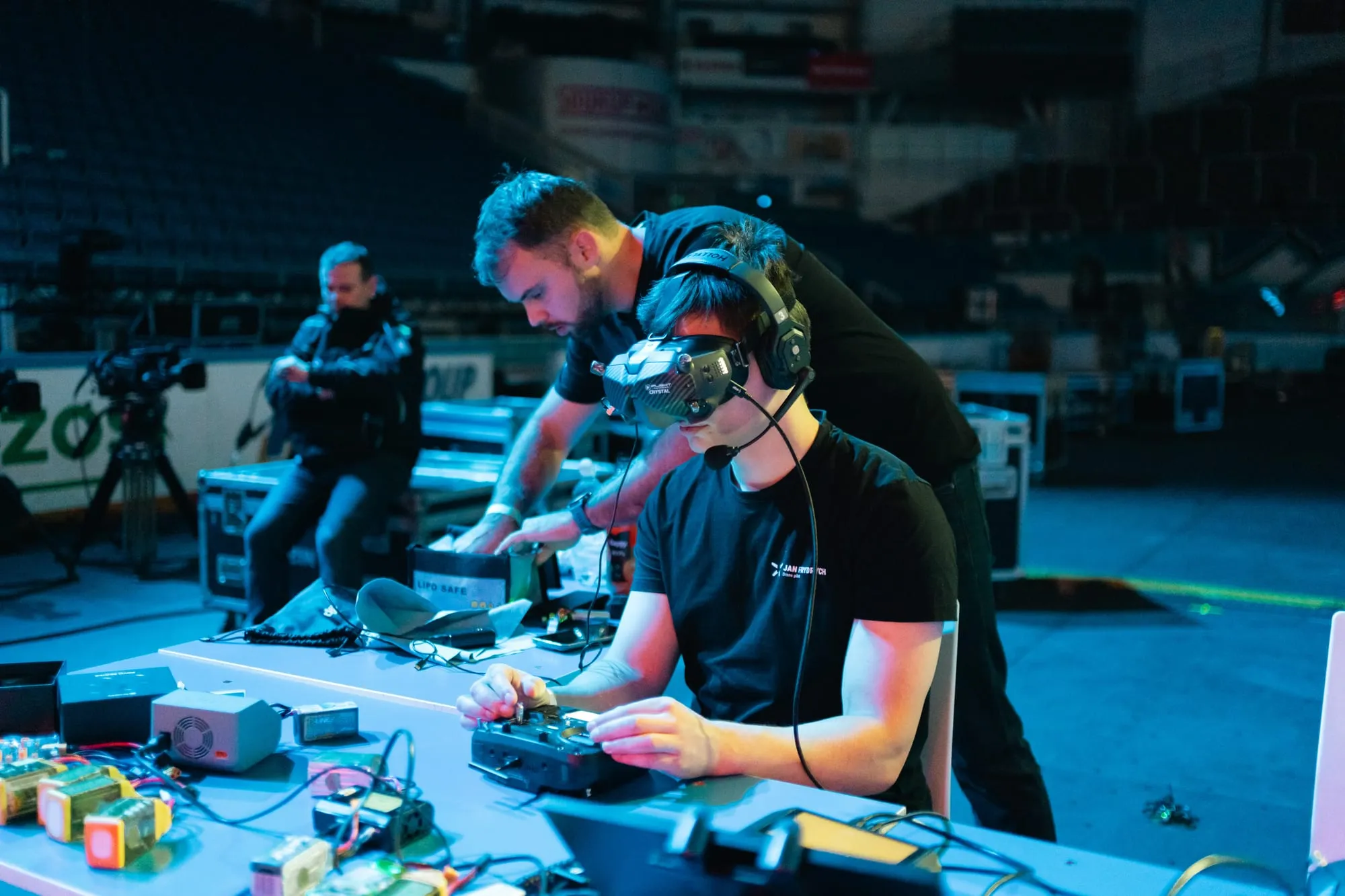
Off air, TBL 10 Nuremberg